Discover how Justice Preethi Padman Surasena became Sri Lanka’s 49ᵗʰ Chief Justice and explore his landmark rulings in this comprehensive profile.
Colombo, 27 July 2025 – Justice Preethi Padman Surasena, the most senior member of Sri Lanka’s Supreme Court, took the oath today as the 49ᵗʰ Chief Justice of Sri Lanka. The ceremony took place at the Presidential Secretariat and was administered by President Anura Kumara Dissanayake, with Dr. Nandika Sanath Kumanayake, Secretary to the President, present as a witness
Surasena’s elevation was the result of a formal process: President Dissanayake nominated him on 22 July 2025 and the Constitutional Council unanimously approved the nomination on 23 July . He succeeds Chief Justice Murdu Nirupa Bidushinie Fernando, who retired today, 27 July, upon reaching the mandatory retirement age of 65
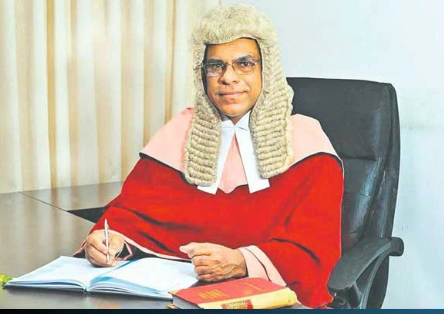
🧑⚖️ Who Is Justice Preethi Padman Surasena?
Preethi Padman Surasena, born after earning his B.Sc. in Physics at the University of Colombo in 1985, entered Sri Lanka Law College the same year. He was sworn in as an Attorney-at‑Law in 1989 and began his legal career at the Attorney General’s Department as a Senior State Counsel
-
2007: Appointed Judge of the High Court by President Mahinda Rajapaksa
-
2016: Elevated to the Court of Appeal by President Maithripala Sirisena, then chosen as President (Chief Judge) of the Court of Appeal in January 2018
-
9 January 2019: Appointed a Puisne Justice of the Supreme Court, the second-highest judicial body in Sri Lanka, by President Sirisena
Since joining the Supreme Court, he stood as the most senior judge after Chief Justice Fernando, making him the natural successor upon her retirement
⚖️ Landmark Judgments: Surasena’s Record in High‑Profile Cases
Justice Surasena built his reputation through several bold rulings aimed at constitutional governance, rule of law, and public accountability:
1. Death Sentence for Drug Kingpin “Wele Suda” (2015)
As a High Court judge, he presided over the trial of Samantha Kumara alias “Wele Suda”, sentencing him to death for drug trafficking and illegal possession. That sentence drew national attention as a rare conviction of a highly notorious criminal
2. 52-Day Constitutional Crisis, 2018
During the constitutional turmoil when President Sirisena attempted to replace Prime Minister Ranil Wickremesinghe with Mahinda Rajapaksa, Justice Surasena, as President of the Court of Appeal, led the bench that ruled these appointments unconstitutional. The bench issued an interim injunction preventing the appointees from exercising power—an unprecedented check on executive overreach in modern Sri Lanka
3. Contempt Ruling on Ven. Galagodaaththe Gnanasara Thera
Surasena chaired a bench in the Court of Appeal that sentenced Bodu Bala Sena Secretary Gnanasara Thera to 19 years (to be served in 6 years) for contempt of court after he disrupted proceedings. This judgment reinforced the sanctity of court decorum
4. Dual Citizenship Disqualification, MP Geetha Kumarasinghe
He led a bench that voided the parliamentary seat of Geetha Kumarasinghe on the basis of her Swiss citizenship, declaring her election invalid under the Constitution
5. Overturning Presidential Pardon of Duminda Silva
As a Supreme Court Justice, he presided on a bench that declared Gotabaya Rajapaksa’s pardon of Murder‑convict MP Duminda Silva unconstitutional and void, reinforcing limits on executive clemency
6. Disqualification of MP Naseer Ahamed
Surasena’s bench disqualified Naseer Ahamed, who voted against his party line, confirming that MPs who violate party policy can lose their seat under Sri Lankan law
7. Blocking Luxury Residence for Ex‑President Sirisena
He was part of the bench that issued an interim injunction to prevent the award of a luxury official residence on Malalasekara Mawatha to former President Sirisena, ruling it unconstitutional self-service by Parliament or Cabinet .
8. Halting e‑Visa Outsourcing
He also presided over a bench that halted a Cabinet plan to outsource e‑visa processing to two private firms, citing national security and potential foreign exchange risks. When the Immigration Controller failed to comply, the court ruled him in contempt and remanded him in September 2024, with sentencing set for 24 July 2025.
🏛️ The Appointment Process and Political Context
Sri Lanka follows a constitutionally mandated process for appointing a Chief Justice under Chapter XV, Article 107–109: the President nominates a candidate, and the Constitutional Council must approve before official appointment by warrant. Judges serve until age 65 unless removed by parliamentary address and presidential order for incapacity or misbehavior .
In July 2025:
-
Chief Justice Murdu Fernando turned 65 on 27 July and retired at that point
-
President Dissanayake nominated Justice Surasena on 22 July, and the Constitutional Council approved the nomination on 23 July
-
He assumed office today, 27 July 2025, as the 49ᵗʰ Chief Justice.
Legal observers have called the appointment of Justice Surasena a considered move, given his record of upholding judicial independence and challenging executive excess.
📌 Surasena’s Early Life & Education: A Snapshot
-
Born and raised in Sri Lanka.
- He received his primary and secondary education at Debarawewa Central College and Dikwella Vijitha Central Colle
-
Earned a B.Sc. in Physics at the University of Colombo (1985)
-
Joined Sri Lanka Law College the same year, passing the entrance exam, and was admitted to the Bar in 1989.
-
Served as a State Counsel in the Attorney General’s Department before entering the judiciary
🚀 Why His Appointment Matters
Judicial Independence & Rights Protection
Justice Surasena’s rulings consistently upheld the rule of law, offering checks on political power—even in high-stakes constitutional matters.
Rule of Law in Action
From capital sentences to rejecting executive pardons, his judgments conveyed Sri Lanka’s judiciary as a guardian of constitutional integrity.
Encouraging Public Trust
His firm decisions against contempt, corruption, and misuse of power inspire confidence in the courts as fair and fearless.
Stability in Stormy Times
Given Sri Lanka’s political turbulence, his elevation signals intent to reinforce legal structures, curb political interference, and support democratic governance.
🧭 What Comes Next
A ceremonial sitting marking his formal induction into office will be held on 31 July 2025 at the Supreme Court building in Colombo. As Chief Justice and Chairman of the Judicial Service Commission, he will play a key role in judicial appointments and oversight
Legal watchers will now monitor how his leadership shapes pending constitutional petitions and reforms regarding court efficiency, backlog reduction, and judicial capacity building.
🧾 Summary: Preethi Padman Surasena at a Glance
| Item | Details |
|---|---|
| 49ᵗʰ Chief Justice | Sworn in on 27 July 2025 |
| Education | B.Sc. Physics, University of Colombo (1985); Sri Lanka Law College entry 1985; Bar 1989 |
| Judicial Career | State Counsel → High Court Judge (2007) → Court of Appeal Judge (2016), President (2018) → Supreme Court Judge (2019) |
| Key Rulings | Wele Suda death sentence; 2018 constitutional crisis injunction; contempt ruling; disqualifications; overthrowing executive pardon; blocking misuse of state assets; halting visa outsourcing |
| Appointment Path | Nominated 22 July 2025 → Approved 23 July 2025 → Oath 27 July 2025 |
| Roles Ahead | Head of the Judiciary; Chair of Judicial Service Commission; oversight of Supreme Court functions |
✅ Conclusion
At 49, Justice Preethi Padman Surasena assumes the highest judicial office in Sri Lanka. His appointment comes at a time when public confidence in the judiciary is critical. With a legacy of courageous rulings and constitutional stewardship, he now leads the Courts as Sri Lanka confronts legal reforms and political pressures. Students of law, civil society, and citizens alike will watch closely as he shapes the future of justice in Sri Lanka.