BREAKING: Sri Lanka police seize 600kg drugs in massive Tangalle bust – 3 deaths, weapons found. Latest updates on 2025’s biggest drug operation.
Sri Lankan police have executed one of the country’s most significant anti-narcotics operations in recent years, seizing over 600 kilograms of illegal drugs and sophisticated weapons in Tangalle. The massive drug bust, which began with the discovery of suspicious deaths, has exposed what authorities believe to be a major international drug trafficking network operating in the southern coastal region.
Timeline of Events: How the Investigation Unfolded
The investigation started when police received reports about a man who died at Tangalle Base Hospital due to suspected poisoning. The victim’s child provided crucial information that led officers to a house under renovation in Seenimodara, Tangalle, where the shocking discoveries began.
Day One: The Deadly Discovery
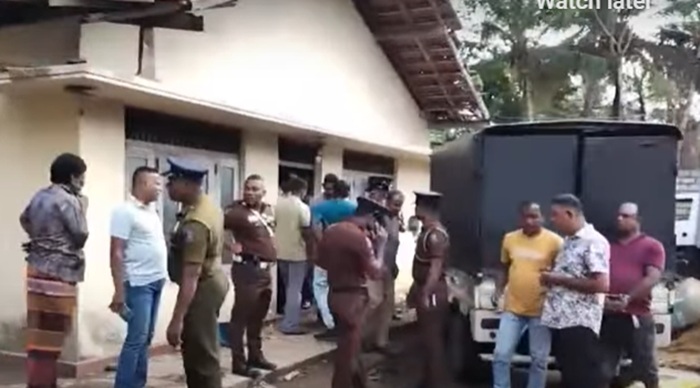
Police arrived at the Seenimodara house and made a grisly discovery – two bodies lying alongside a significant quantity of crystal methamphetamine, commonly known as “ICE.” The house, reportedly under renovation, became the starting point for what would become Sri Lanka’s largest drug seizure operation in 2025.
Investigators found the first cache of drugs hidden within the premises, including more than 10 kilograms of suspected ICE. A lorry parked nearby contained an additional 200 kilograms of mixed narcotics, consisting of both heroin and crystal methamphetamine.
Expansion of the Operation
Acting on intelligence gathered from the initial discovery, police launched a coordinated search operation across Tangalle. Soon after, a second lorry was found near a service station in Tangalle, from which weapons and narcotics, including ICE and heroin, were found. Police, thereafter, found a third lorry also near the house in Seenimodara from which narcotics consisting of ICE and heroin had been found.
The Staggering Scale of Seizures
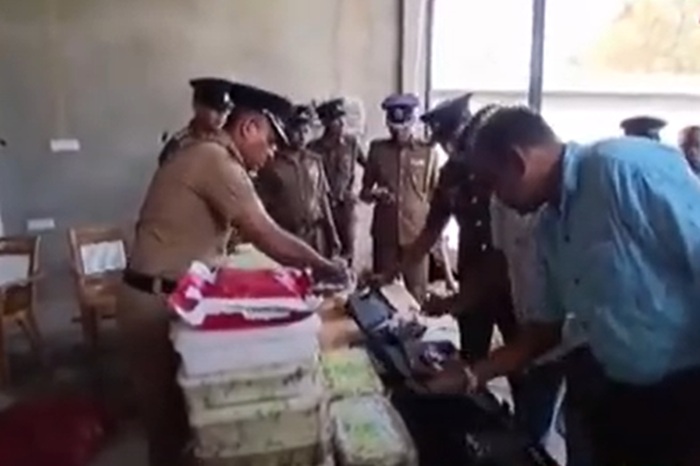
According to Minister of Public Security Ananda Wijepala, the total haul reached unprecedented levels. The operation resulted in the seizure of:
- 245 kilograms of heroin – one of the largest single seizures in Sri Lankan history
- 380 kilograms of crystal methamphetamine (ICE) – highlighting the growing threat of synthetic drugs
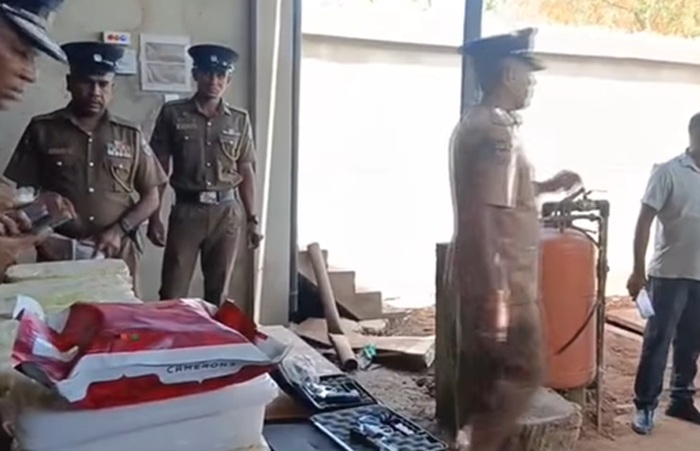
- Multiple firearms including 5 revolvers and 1 T-56 assault rifle
- Additional weapons cache including a gold-colored T-56 magazine, 115 live bullets, and a hand grenade
The combined street value of these narcotics is estimated to exceed several billion rupees, making this operation a significant blow to drug trafficking networks operating in the region.
Weapons Cache Reveals Organized Crime Links
The discovery of sophisticated weapons alongside the drugs points to well-organized criminal networks with access to military-grade equipment. Police Spokesman ASP F.U. Wootler confirmed that the seized weapons include:
- Five revolvers found across multiple vehicles
- One T-56 assault rifle – a weapon typically associated with organized crime
- Military-grade ammunition and explosive devices
- Professional-grade equipment suggesting international connections
The presence of such weapons indicates that this operation was not merely a drug trafficking scheme but potentially involved organized crime syndicates with broader criminal activities.
Investigation Methodology and Police Response
The Sri Lankan Police Narcotics Bureau employed systematic investigation techniques that proved crucial to the operation’s success. The investigation model followed these key phases:
Intelligence Gathering
Officers used information from the hospitalized victim’s family to identify the initial location. This human intelligence proved more valuable than traditional surveillance methods.
Coordinated Search Operations
Rather than conducting isolated raids, police implemented a coordinated approach, searching multiple locations simultaneously to prevent suspects from disposing of evidence.
Forensic Analysis
Preliminary forensic investigations helped identify the exact nature of the seized substances, confirming the presence of both heroin and crystal methamphetamine.
The Growing ICE Problem in Sri Lanka
This seizure highlights the increasing prevalence of crystal methamphetamine in Sri Lanka’s drug trade. ICE, a highly addictive synthetic stimulant, has become increasingly popular among traffickers due to its:
- High profit margins compared to traditional drugs
- Ease of production in clandestine laboratories
- Growing demand in regional markets
- Compact size making it easier to smuggle
Drug enforcement experts note that ICE trafficking has increased significantly in South Asian regions, with Sri Lanka serving as both a transit point and destination market.
Economic Impact and Regional Implications
The Tangalle operation reveals the sophisticated nature of modern drug trafficking networks operating in the Indian Ocean region. The scale of this bust suggests:
International Connections
The quantity and variety of drugs indicate connections to international trafficking routes, possibly linking Southeast Asian production centers with Middle Eastern and European markets.
Economic Consequences
The street value of seized drugs represents millions of dollars in lost revenue for criminal organizations, potentially disrupting regional trafficking patterns.
Tourism and Security Concerns
Tangalle, being a popular tourist destination, raises concerns about the impact of drug trafficking on Sri Lanka’s vital tourism industry.
Previous Cases and Context
This operation builds on Sri Lanka’s ongoing efforts to combat drug trafficking. In October, a Sri Lankan court sentenced 10 Iranian men to life imprisonment after they pleaded guilty to smuggling more than 111 kilograms of heroin. The men were among 17 arrested in Sri Lankan waters in April 2016 while transporting narcotics aboard an Iranian trawler.
Recent enforcement statistics show that Sri Lankan authorities have significantly increased their anti-narcotics operations, with multiple major seizures reported throughout 2025.
Arrests and Ongoing Investigation
Police have confirmed the arrest of one suspect in connection with the operation, while efforts continue to apprehend additional individuals. ASP Wootler indicated that “measures are underway to arrest another suspect,” suggesting that the investigation remains active.
Investigative Challenges
The case presents several investigative complexities:
- Multiple crime scenes requiring careful coordination
- International elements potentially involving foreign nationals
- Complex logistics indicating sophisticated criminal planning
- Witness protection concerns given the violent nature of the crimes
Public Health and Safety Implications
The discovery of such large quantities of dangerous drugs raises significant public health concerns. Health officials emphasize the importance of community awareness regarding:
Drug-Related Health Risks
- ICE addiction can cause severe psychological and physical health problems
- Heroin remains one of the most dangerous and addictive substances
- Community exposure risks from illegal drug operations
Safety Measures
Authorities advise residents to report suspicious activities and avoid handling unknown substances that might be encountered.
Government Response and Policy Implications
Minister Ananda Wijepala’s public statement regarding the seizures indicates the government’s commitment to addressing drug trafficking through:
- Enhanced enforcement operations
- International cooperation with regional law enforcement agencies
- Technology upgrades for detection and investigation capabilities
- Community engagement programs to prevent drug-related crimes
Regional Security Cooperation
This operation demonstrates the need for enhanced regional cooperation in combating drug trafficking. Sri Lanka’s strategic location in the Indian Ocean makes it a crucial point for international trafficking routes.
International Partnerships
- Cooperation with neighboring countries on maritime security
- Intelligence sharing with international law enforcement agencies
- Technology transfer for advanced detection methods
Expert Analysis and Future Outlook
Drug enforcement experts view this operation as a significant success in disrupting regional trafficking networks. However, they caution that sustained efforts are necessary to prevent the reorganization of criminal operations.
Key Success Factors
- Timely response to initial intelligence
- Coordinated approach across multiple agencies
- Thorough investigation techniques
- Public cooperation in providing information
Future Challenges
- Adapting to new trafficking methods
- Addressing synthetic drug proliferation
- Maintaining international cooperation
- Building community resistance to drug-related activities
Community Impact and Response
The Tangalle community has expressed shock at the scale of the drug operation in their area. Local residents emphasize the importance of continued vigilance and cooperation with law enforcement agencies.
Community leaders stress that tourism-dependent areas like Tangalle must maintain their reputation for safety and security to protect the local economy.
A Major Victory with Ongoing Implications
The Tangalle drug bust represents more than just a successful law enforcement operation – it reveals the sophisticated and dangerous nature of modern drug trafficking networks operating in Sri Lanka. The seizure of over 600 kilograms of narcotics and multiple weapons demonstrates both the scale of the threat and the effectiveness of coordinated police work.
As investigations continue, this operation serves as a reminder of the constant vigilance required to combat international drug trafficking. The success of this operation provides valuable intelligence that will likely contribute to future enforcement efforts and regional security cooperation.
The Sri Lankan authorities have sent a clear message to criminal organizations that the country will not tolerate being used as a transit point or base for drug trafficking operations. However, the fight against drug trafficking requires sustained effort, international cooperation, and community engagement to achieve long-term success.
Frequently Asked Questions (FAQs)
1. What exactly was seized in the Tangalle drug bust?
Police seized over 600 kilograms of illegal narcotics, including approximately 245 kg of heroin and 380 kg of crystal methamphetamine (ICE). Additionally, officers recovered 5 revolvers, 1 T-56 assault rifle, 115 live bullets, a hand grenade, and a gold-colored T-56 magazine. Three lorries and other vehicles were also confiscated as part of the operation.
2. How did police discover this major drug operation?
The investigation began when a man died at Tangalle Base Hospital from suspected poisoning. His child told police that the victim had been drinking with others at a house in Seenimodara, Tangalle. When officers investigated this house, they discovered two more bodies and the first cache of drugs, which led to the broader operation.
3. Is this the largest drug seizure in Sri Lanka’s history?
While this is one of the most significant drug busts in recent years, it ranks among the top seizures in Sri Lankan history. The 600+ kg total makes it the largest single operation in 2025 and demonstrates the sophisticated nature of modern drug trafficking networks operating in the region.
4. What makes crystal methamphetamine (ICE) particularly dangerous?
Crystal methamphetamine is a highly addictive synthetic stimulant that causes severe psychological and physical health problems. It’s particularly concerning for law enforcement because it offers high profit margins for traffickers, is relatively easy to produce in illegal laboratories, and has growing demand in regional markets due to its compact size for smuggling.
5. How many people have been arrested and are more arrests expected?
Police have confirmed the arrest of one suspect so far, with efforts underway to apprehend additional individuals. Police Spokesman ASP F.U. Wootler indicated that “measures are underway to arrest another suspect,” suggesting the investigation remains active with more arrests likely as the case develops.