Sri Lanka bread price jumps to Rs. 130 midnight tonight — find out how the fuel crisis directly hits your daily breakfast and what comes next for food price
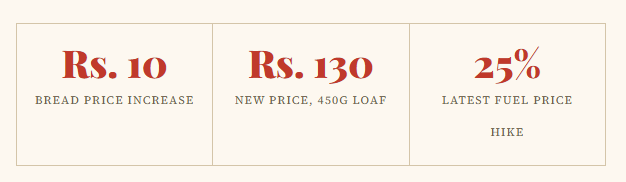
Sri Lanka’s Bakery Owners’ Association announces a Rs. 10 price hike on all bread products effective midnight — the direct fallout of the island’s third fuel price revision in less than a month, driven by the widening Middle East energy crisis.
COLOMBO — Before the sun rises across Sri Lanka on Monday, the price of every loaf of bread in the country changes. The Bakery Owners’ Association confirmed late Sunday that a 450-gram loaf — the same one millions of families rely on for school lunches, morning tea, and evening meals — now costs Rs. 130, up from Rs. 120. Every other bakery product follows the same Rs. 10 upward revision. The culprit, bakery owners say, is clear: a punishing fuel price hike that has made baking, and delivering, bread dramatically more expensive overnight.
This is not simply a story about bread. It is a story about how a conflict thousands of miles away in the Middle East — and the energy shock it creates — reaches all the way into the smallest kitchens of Matara, Kandy, Jaffna, and every town in between. It is a story about what happens when a country that imports every drop of fuel it uses faces back-to-back price revisions with no cushion left.
The Fuel Shock That Started It All
On Saturday night, Ceylon Petroleum Corporation (CPC) announced Sri Lanka’s third fuel price revision in less than a month. Auto diesel, petrol, and kerosene all saw price hikes ranging from Rs. 60 to Rs. 90 per litre. The price of auto diesel reached Rs. 382 per litre, compared to Rs. 281 before the recent series of revisions began. Lanka IOC confirmed it would align its prices with CPC’s new rates immediately.
Sri Lanka depends entirely on imports for its fuel needs and also procures coal from overseas to meet its electricity generation requirements. That single fact makes the country exceptionally vulnerable to global energy shocks — and right now, the global energy market is in turmoil.
The country mainly sources refined petroleum products from Singapore, Malaysia, and South Korea, while crude oil for its Iran-built refinery comes from the Middle East — a region currently facing heightened geopolitical tensions. The back-to-back price hikes are expected to add pressure on transport costs and overall inflation, impacting both businesses and households already grappling with economic challenges.
Why Bakeries Feel the Fuel Bite Immediately
Many people wonder why a fuel price hike makes bread more expensive so quickly. The answer lies in understanding exactly how a bakery operates. A typical bakery runs large commercial ovens that need either electricity or cooking gas — both of which are priced off fuel benchmarks. Delivery vans carry freshly baked goods to shops across cities and villages every single morning, consuming diesel with every kilometre. Wheat flour, the primary raw material, arrives at bakeries from factories and ports aboard trucks that also run on diesel.
When diesel jumps by Rs. 101 per litre in a single month — from Rs. 281 to Rs. 382 — every single one of those cost lines surges simultaneously. Bakery owners cannot absorb that magnitude of increase without passing it on to consumers. The Bakery Owners’ Association made that clear in their announcement: production and distribution costs have risen sharply enough to make a price revision unavoidable.
“The decision follows the recent fuel price hike, which bakery owners say has led to a rise in production and distribution costs. The increase is expected to have a direct impact on consumers, as bread remains a staple food item across the country.”— Bakery Owners’ Association Statement, March 23, 2026
A Staple Under Pressure: Who Gets Hit Hardest?
Bread occupies a unique place in Sri Lankan daily life. Unlike many foods, it requires no preparation, no cooking, and no utensils. For working-class families, daily-wage earners, school children, and elderly people living alone, a loaf of bread often serves as the most practical and affordable meal option available. A Rs. 10 increase may sound small in isolation, but consider that a family purchasing bread daily faces an additional Rs. 300 expense per month — that is money that must come from somewhere else in an already stretched household budget.
The impact does not stop at bread alone. The Association confirmed that all other bakery products — rolls, buns, short eats, and pastries — will also increase by Rs. 10 each. For the small tea kiosks and roadside cafés that serve as daily gathering points for workers across Sri Lanka, these cumulative increases threaten the thin margins on which they survive.
- A 450g loaf of bread now costs Rs. 130 — up Rs. 10 effective March 23 midnight.
- Diesel prices rose from Rs. 281 to Rs. 382 per litre in under four weeks.
- Petrol now costs Rs. 398 per litre — up from Rs. 317.
- Around 90% of private buses threatened to withdraw from service due to the fuel hike.
- Sri Lanka imports 100% of its fuel — it produces none domestically.
- This is Sri Lanka’s third fuel revision in less than one month.
- All other bakery products also increase by Rs. 10 each.
Bus Fares, Transport Costs, and the Wider Ripple Effect
The bread price hike does not exist in isolation — it is one wave in a much larger economic ripple. Due to the sharp increase in fuel prices, around 90 percent of privately operated buses were expected to be withdrawn from service, according to the Lanka Private Bus Owners’ Association. The National Transport Commission also said it would implement measures to revise bus fares.
Higher bus fares hit the same population that buys bread — daily commuters, students, market traders, and factory workers. When transport costs rise at the same time that food prices increase, households face a double squeeze. Workers who spend more money getting to work bring home less purchasing power. The mathematics of everyday survival becomes harder.
Retailers, too, face a compounded challenge. The cost of restocking shop shelves rises when delivery trucks consume more expensive diesel. Those increases tend to travel quietly into the price tags of goods across all categories — not just bread, but rice, vegetables, canned goods, and household supplies that arrive by road.
The Global Trigger: A War That Reaches Every Kitchen
To understand why this is happening, one must look beyond Sri Lanka’s borders. The Middle East — the source of crude oil for Sri Lanka’s refinery — has been experiencing significant geopolitical tension. The latest revision comes close on the heels of an eight per cent price hike announced last week, along with fuel rationing measures aimed at curbing consumption. The government’s move reflects growing concerns over rising import costs and supply uncertainties.
For a country that imports every litre of fuel it uses, global energy market disruptions translate directly into domestic price pain with almost no delay. There is no buffer of domestic production, no large strategic reserve, and little room for the government to subsidise prices following the 2022 economic crisis, which forced Sri Lanka to restructure its international debt and accept IMF conditions that restrict untargeted subsidies.
India is currently examining requests from Sri Lanka and other neighbouring countries for diesel supplies. India is a major exporter of refined petroleum products, especially to its neighbourhood. Whether those bilateral supply conversations result in price relief for Sri Lankan consumers remains to be seen.
What Comes Next? Economists and Consumers Watch Carefully
The immediate question on everyone’s mind is whether this bread price increase is the last — or simply the first in a new wave. If global energy prices continue to rise due to ongoing tensions in the Middle East, Sri Lanka’s fuel import bill grows accordingly. That means bakeries, transport operators, restaurants, and manufacturers all face continuing cost pressures with no guaranteed ceiling.
For consumers, the practical advice is straightforward but difficult: households need to revisit their monthly budgets now. Bread, bus fares, and a wide range of goods that depend on transport and energy are all likely to cost more in the weeks ahead. Families that can adjust meal planning, consolidate trips, or source vegetables from nearby markets stand to absorb some of the impact.
For policymakers, the challenge is more complex. The government must balance the need to keep fuel prices aligned with actual import costs — a condition of the IMF programme — against the social strain of rapid price increases on low- and middle-income households. Targeted relief, whether through subsidised public transport or food assistance programmes for the most vulnerable, may become urgently necessary if prices continue their upward trajectory.
A Historical Pattern Sri Lanka Knows Too Well
Sri Lankans who lived through the 2022 economic crisis remember a far more severe version of this dynamic. At the peak of that crisis, flour shortages sent bread prices soaring toward Rs. 170 and beyond, with bakery associations warning that a loaf might hit Rs. 300 if conditions did not improve. The country eventually stabilised through a combination of IMF support, debt restructuring, and painful but necessary economic reforms.
The current situation is not a repeat of 2022’s full collapse. Sri Lanka’s foreign exchange reserves have recovered, inflation has moderated, and the economy has returned to modest growth. However, the country’s structural vulnerability — its total dependence on imported fuel — means that external shocks like the current Middle East crisis can still deliver sharp, fast pain to ordinary people.
The lesson from history is this: the price of bread is never just about bread. It is a signal. When a loaf of bread gets more expensive overnight, it means that energy, transport, manufacturing, and distribution costs have all moved simultaneously in the same direction. Every household that opens a bread bag in the morning is, in a small but real way, connected to global energy markets, shipping routes, geopolitical decisions, and the price of diesel in Colombo.
What You Can Do: Practical Steps for Sri Lankan Families
While government and industry leaders work through the larger economic picture, families across Sri Lanka must navigate the immediate reality of higher costs. Some practical steps can help households manage the impact of rising bread and food prices without compromising nutrition or well-being.
First, consider diversifying breakfast options. Sri Lankan cuisine offers many affordable, nutritious alternatives to bread — from pol sambol with rice to string hoppers, which use less imported wheat. Incorporating these traditional foods into daily meals reduces dependence on products whose prices are tied directly to global wheat and fuel markets.
Second, buy strategically. Purchasing bread from local bakeries rather than supermarkets sometimes offers modest savings. Reducing food waste — finishing every loaf before it goes stale — means every rupee spent on bread actually feeds the family rather than filling the bin.
Third, stay informed. Price changes in fuel typically precede price changes in food and transport by days or weeks. Following reliable news sources allows families to anticipate budget adjustments before costs arrive rather than reacting to them after the fact.
Every Rs. 10 Tells a Bigger Story
A Rs. 10 increase on a loaf of bread seems like a small number. In the context of a family budget already stretched by three years of economic recovery, it is anything but small. It represents the final translation of a complex chain — Middle East conflict, global oil markets, Sri Lanka’s fuel import dependency, diesel prices, delivery costs, oven energy costs — into a single, visible, unavoidable number at the bakery counter.
The Bakery Owners’ Association did not make this decision lightly. Bakery owners understand, better than most, that higher prices mean fewer customers. But when fuel costs spike by 36% in under a month, the margin for absorbing those costs simply disappears.
Sri Lanka has faced economic storms before and found its way through them. The current fuel crisis and its knock-on effects on food prices are a serious challenge — but one that the country, its people, and its policymakers are navigating with growing experience. What matters most now is that the burden of adjustment does not fall entirely on those who can least afford to carry it.
The loaf of bread at Rs. 130 is more than a food item. It is a reminder that in a globally connected world, no country — and no kitchen table — is truly isolated from what happens thousands of miles away.