Historic! India’s Vice President CP Radhakrishnan lands in Sri Lanka — full story of the meetings, the cyclone relief deal, and why this visit changes everything between the two nations.
In a landmark diplomatic move, India’s Vice President C.P. Radhakrishnan touched down in Colombo on April 19, 2026 — making history as the first Indian Vice President to make a bilateral visit to Sri Lanka. What unfolded over two days was not just diplomacy. It was a powerful statement about the future of South Asia.
Why This Visit Matters More Than You Think
When a country sends its second-highest leader on a bilateral visit for the very first time, the world pays attention. India did exactly that — and Sri Lanka was ready to receive it.
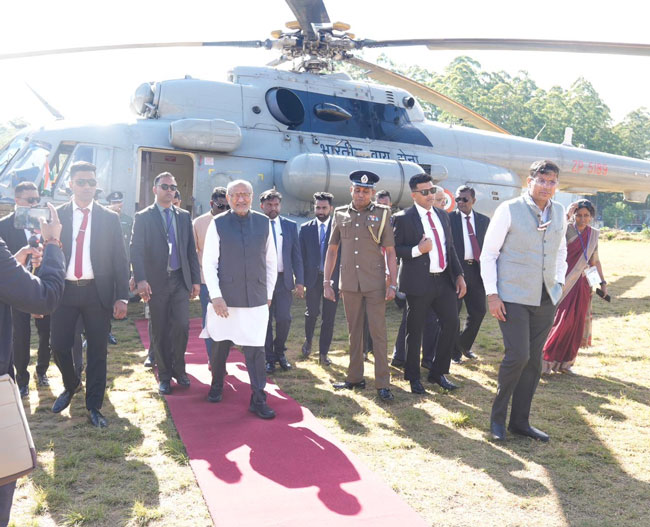
Vice President Radhakrishnan arrived at Bandaranaike International Airport at around 9:30 a.m. on April 19, accompanied by a senior delegation of 49 Indian government officials. The sheer size of the delegation signals one thing clearly: India means serious business with its island neighbor.
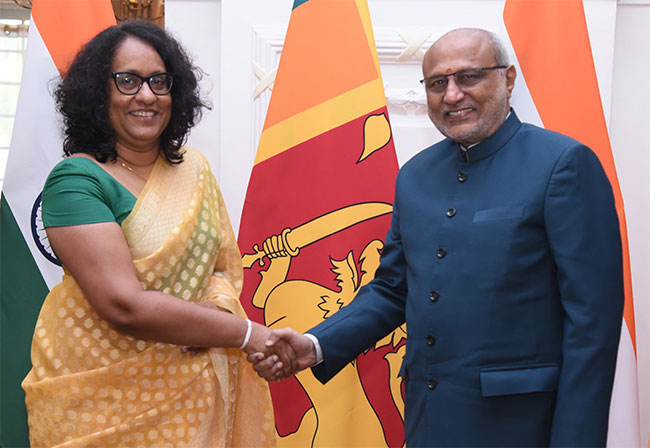
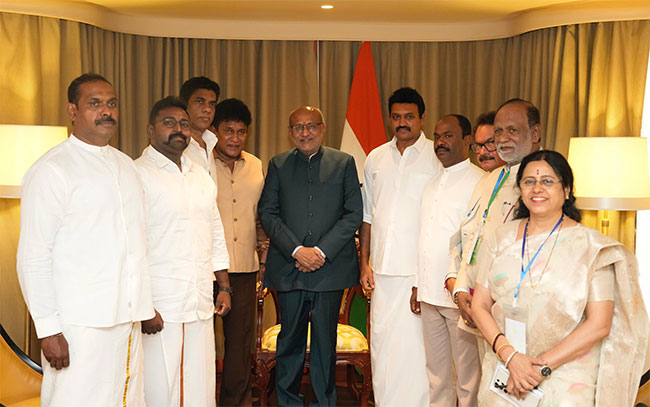
Over the next two days, the Vice President held back-to-back meetings with Sri Lanka’s President Anura Kumara Dissanayake, Prime Minister Dr. Harini Amarasuriya, Opposition Leader Sajith Premadasa, and political leaders representing Tamil communities in the North and East. He also traveled to the hill country of Nuwara Eliya on April 20 to personally inspect housing projects built for the Indian-origin Tamil community.
This was not a ceremonial visit. It was a working visit — and every meeting carried weight.
A Storm, A Package, and a Promise Kept
One of the most significant topics on the agenda was Sri Lanka’s recovery from Cyclone Ditwah, a devastating storm that tore through the island’s northern and eastern coastal regions, leaving entire communities destroyed.
India responded — and responded fast.
New Delhi dispatched a USD 450 million rehabilitation and relief package to help communities rebuild their lives. Roads, homes, livelihoods — the money went toward restoring what the storm had taken away. During the Vice President’s visit, Tamil political leaders gathered to personally thank the Indian government for this intervention.
India’s Ministry of External Affairs (MEA) spokesperson Randhir Jaiswal confirmed on social media platform X that Tamil party leaders specifically praised India’s “Neighbour First” policy, calling Indian aid instrumental in stabilizing the communities hit hardest by the cyclone.
The MEA also confirmed that India will continue to monitor how effectively the USD 450 million package reaches the grassroots level — a commitment that goes beyond writing a check and actually follows the money to where it matters most.
The Housing Project: Building More Than Homes
On the morning of April 20, Vice President Radhakrishnan drove up into the mountains to visit Nuwara Eliya — the heartland of Sri Lanka’s Indian-origin Tamil community. His destination: housing settlements built under India’s Housing Project Phase III.
The numbers speak for themselves. India has already constructed 4,000 houses under this program, with an additional 10,000 currently under construction. These are not just buildings. For families that have lived in plantation-era estate quarters for generations, these homes represent dignity, stability, and a new beginning.
Indian High Commissioner to Sri Lanka Santosh Jha noted that the Vice President’s engagement with these communities was a deliberate choice — a direct, human-level connection between India and the Tamil population that has long looked to New Delhi as a cultural anchor.
Meeting the President: Deep Roots, New Goals
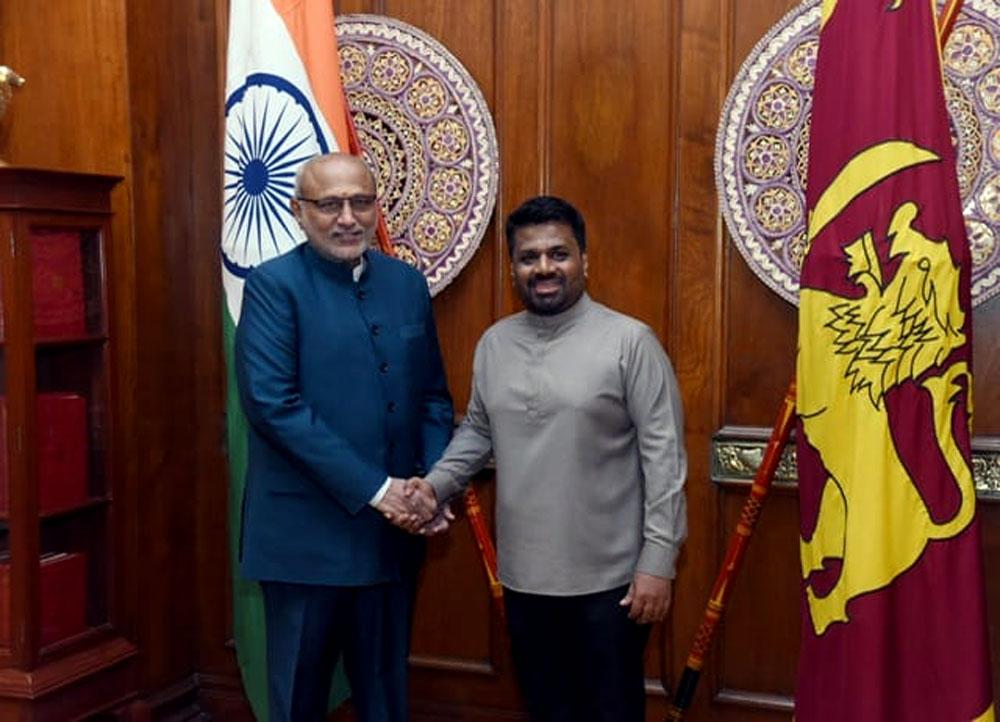
At the Presidential Secretariat in Colombo, Vice President Radhakrishnan met President Anura Kumara Dissanayake for what officials described as “productive discussions.” The conversation ranged widely — from ongoing development projects and cyclone rehabilitation to the long-standing fishermen issue that has created friction between the two countries for years.
Both sides agreed on the importance of handling the fishermen dispute in a humanitarian manner, one that protects the livelihoods of fishing communities on both sides of the Palk Strait. It is a sensitive issue that has no easy solution — but the fact that both leaders addressed it directly shows a willingness to move forward with honesty rather than avoidance.
The discussions also covered the broader framework of India-Sri Lanka relations, rooted in what both governments described as “shared history, civilisational links, and longstanding people-to-people connections.”
Lunch at Temple Trees: A Warm Welcome from the Prime Minister
Prime Minister Dr. Harini Amarasuriya hosted Vice President Radhakrishnan for a luncheon meeting at Temple Trees — Sri Lanka’s iconic official residence for the Prime Minister. The setting itself sent a message: this is not just a formal diplomatic encounter. It is a relationship built on warmth.
MEA spokesperson Randhir Jaiswal described the meeting as one where leaders “recalled the shared civilizational heritage between the two countries” and explored ways to strengthen bilateral cooperation, including people-to-people bonds.
That phrase — people-to-people — appeared repeatedly throughout the visit. India is clearly making a strategic push to move beyond government-to-government diplomacy and build direct ties between citizens, communities, and cultures.
The Opposition Weighs In: Sajith Premadasa’s Vision
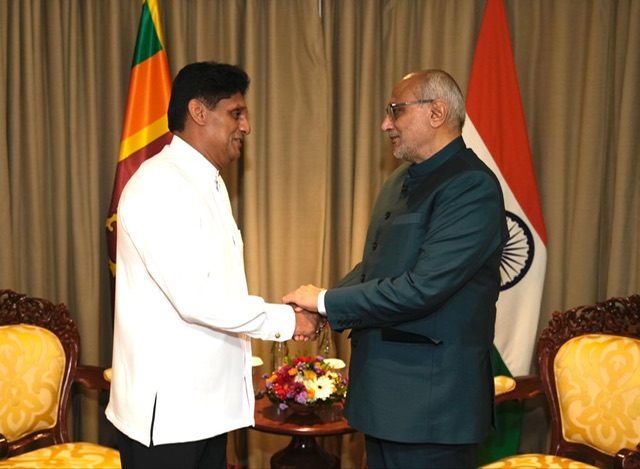
In a notable gesture, Vice President Radhakrishnan also met with Opposition Leader Sajith Premadasa — a move that shows India’s commitment to building relationships across Sri Lanka’s political spectrum, not just with those currently in power.
Premadasa described their discussions as “constructive,” with a focus on expanding trade, deepening economic ties, and finding practical opportunities that benefit both nations. He called Sri Lanka and India “true partners” — countries that share not just geography, but history, challenges, and a common future.
His call for “greater ambition, trust, and cooperation” reflects a growing consensus across Sri Lanka’s political divide: the relationship with India is not just important. It is essential.
India’s Strategic Vision: Neighbourhood First and MAHASAGAR
This visit fits squarely within India’s two major foreign policy frameworks: the Neighbourhood First Policy and Vision MAHASAGAR.
The Neighbourhood First Policy, which India has championed for years, places special emphasis on building strong ties with immediate neighbors — not through dominance, but through mutual benefit and genuine partnership. Sri Lanka, as a key maritime neighbor in the Indian Ocean, sits at the very heart of this vision.
Vision MAHASAGAR — a newer framework — focuses on deepening India’s engagement with the broader Indian Ocean region. For New Delhi, Sri Lanka is not just a neighbor. It is a strategic partner in shaping the future of one of the world’s most important waterways.
The Vice President’s visit makes crystal clear: India is not stepping back from Sri Lanka. It is stepping forward.
What This Visit Means for Ordinary Sri Lankans
Diplomatic visits can seem distant from everyday life. But this one carries real consequences for real people.
For Tamil families in Nuwara Eliya, the housing project means a proper roof over their heads. For fishing communities in the north, it means hope that a diplomatic solution to cross-border disputes will protect their livelihoods. For cyclone survivors in the east, it means that the USD 450 million in aid actually reaches them. And for Sri Lanka as a whole, it means a stronger relationship with its most powerful neighbor — one that can translate into trade, investment, jobs, and stability.
Diplomacy at the highest level only works when it connects to the lowest level. This visit, with its combination of presidential meetings, community visits, and housing project inspections, suggests India understands that.
Looking Ahead: What Comes Next
The Vice President’s departure on April 20 marks the end of a two-day visit — but not the end of the story. India has signaled that it will monitor the implementation of the USD 450 million relief package closely. The housing project is ongoing, with 10,000 more homes in construction. The fishermen issue remains open for further dialogue.
Both countries have committed to deepening their “multifaceted bilateral ties.” That phrase covers a lot of ground — and in the coming months, we will see exactly how much of that ground turns into concrete progress.
One thing is certain: this historic first bilateral visit by an Indian Vice President to Sri Lanka has reset the tone of the relationship. It has signaled seriousness, warmth, and long-term commitment from New Delhi — and Sri Lanka has responded in kind.
The future of South Asia’s most important bilateral relationship just got a little clearer — and a lot more promising.
India Sri Lanka relations 2026, Indian VP Sri Lanka historic visit,
Radhakrishnan Colombo visit
India Sri Lanka relations 2026, Indian VP Sri Lanka historic visit,
Radhakrishnan Colombo visit
India Sri Lanka relations 2026, Indian VP Sri Lanka historic visit,
Radhakrishnan Colombo visit
India Sri Lanka relations 2026, Indian VP Sri Lanka historic visit,
Radhakrishnan Colombo visit
India Sri Lanka relations 2026, Indian VP Sri Lanka historic visit,
Radhakrishnan Colombo visit