Shammi Silva resigns. Government takes over. Sangakkara steps in. Everything you need to know about the Sri Lanka Cricket Transformation Committee 2026
The Moment Everything Changed at Maitland Place
Sri Lanka Cricket just hit the reset button — and the whole cricketing world is watching.
On April 29, 2026, in a move that stunned fans, players, and officials across the island, the entire Sri Lanka Cricket (SLC) Executive Committee — led by four-time president Shammi Silva — handed in their resignations. Within hours, the government stepped in. And then came the announcement that nobody expected: a nine-member Cricket Transformation Committee featuring some of the biggest names in Sri Lankan cricketing history.
This is not just a change in administration. This is a complete reset of how cricket will be run in Sri Lanka.
Let’s break down everything that happened — how we got here, who is now in charge, and what this means for the future of Sri Lanka’s most beloved sport.
Background: How Did Sri Lanka Cricket Get to This Point?
To understand why this shakeup happened, you need to go back several years.
Shammi Silva first became SLC president in 2019. He won re-election in 2021, 2023, and again in 2025 — all of them unopposed. During his seven-year reign, he also served as the President of the Asian Cricket Council (ACC), taking over from Jay Shah in 2025.
But behind the titles and the re-elections, serious problems were building up.
The Key Failures That Led to the Collapse
1. The ICC Suspension (2023–2024) In one of the most embarrassing moments in Sri Lankan cricket history, the International Cricket Council (ICC) suspended Sri Lanka Cricket for two months in late 2023 and into 2024. The ICC cited direct political interference in the running of the national board as the main reason. That suspension damaged Sri Lanka’s reputation on the global stage and raised serious questions about governance.
2. The Under-19 World Cup Disaster Sri Lanka was originally selected to host the 2024 Men’s Under-19 World Cup — a massive opportunity to showcase the country on the international stage. But due to ongoing concerns around administration and infrastructure, the tournament was relocated to South Africa. It was a public embarrassment that further dented the credibility of the SLC leadership.
3. The T20 World Cup Exit Perhaps the final straw came during the T20 World Cup that Sri Lanka co-hosted with India. The national men’s team failed to advance past the Super Eights stage — a shocking early exit from a tournament held on home soil. For a nation that has won a T20 World Cup and multiple ODI World Cups, that result was simply unacceptable.
4. Governance, Financial Irregularities & Declining Performance Behind the scenes, there were mounting criticisms of financial mismanagement, weak governance structures, and a national team in steady decline. Administrators were focused on politics and power rather than building a winning cricket system.
The pressure finally became too much. On April 29, 2026, Silva and the entire Executive Committee submitted their resignations to Sports Minister Sunil Kumara Gamage.
The Government Steps In: What Sections 31 and 34 Mean
Once the resignations were accepted, Sports Minister Sunil Kumara Gamage acted immediately under the powers granted to him by Sections 31 and 34 of the Sports Law No. 25 of 1973.
Under these provisions, the administration of Sri Lanka Cricket was temporarily brought under the Ministry of Youth Affairs and Sports with immediate effect.
This means the government — not the old cricket board — now controls all administrative functions of SLC. The Ministry made clear this is a transitional step, designed specifically to allow structural reforms to take place without interference from the old leadership.
Meet the Nine-Member SLC Transformation Committee
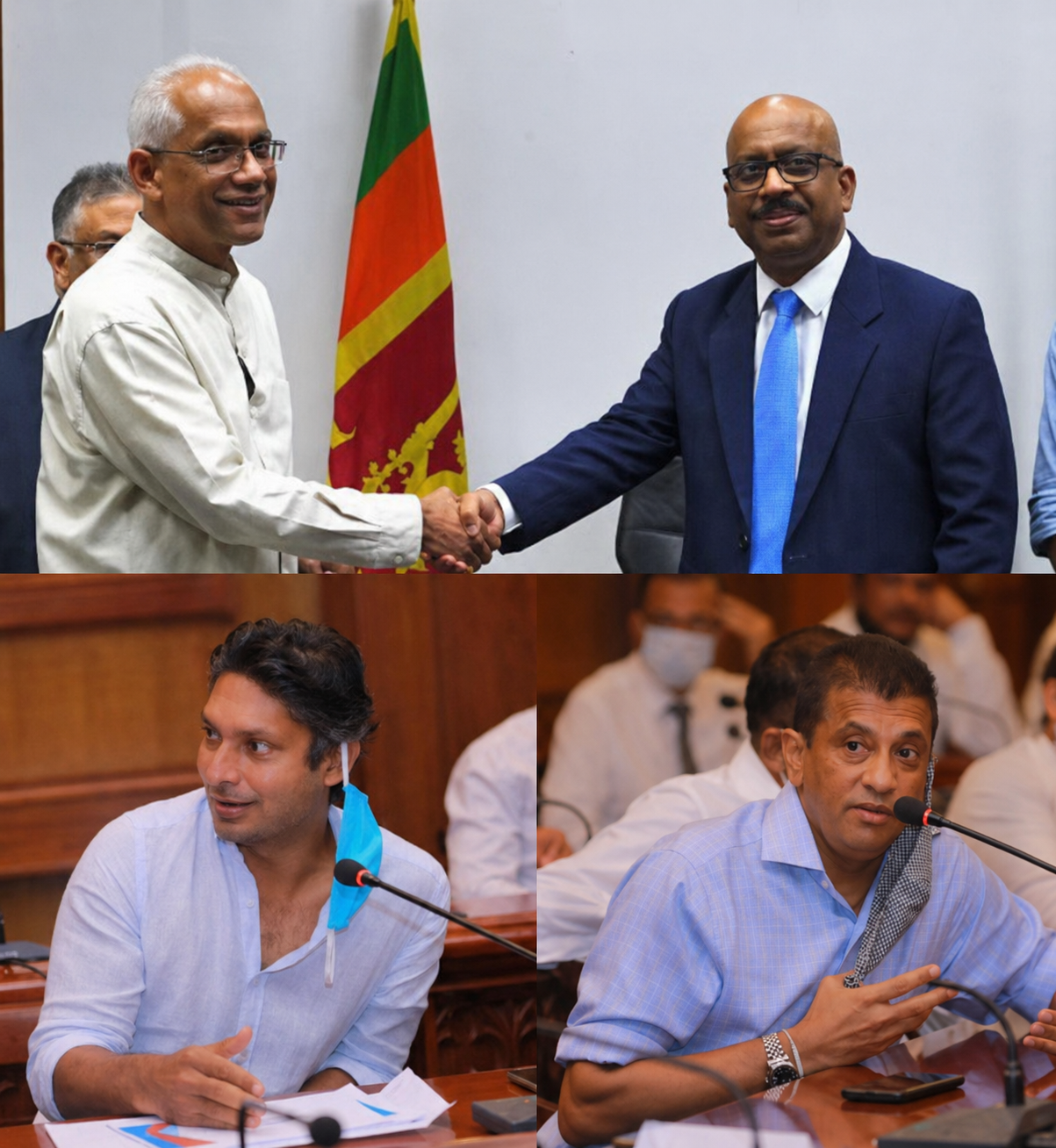
Within hours of the takeover, Sports Minister Gamage announced the formation of the Sri Lanka Cricket Transformation Committee — a nine-member body packed with cricketing legends and experienced professionals.
Here is the full list:
| Name | Role |
|---|---|
| Eran Wickramaratne | Chairman |
| Roshan Mahanama | Member |
| Kumar Sangakkara | Member |
| Sidath Wettimuny | Member |
| Thushira Radella | Member |
| Avanthi Colombage | Member |
| Prakash Schaffter | Member |
| Upul Kumarapperuma | Member |
| Dinal Philips | Member |
Who Is Eran Wickramaratne — The Man Leading the Charge?
The appointment of Eran Wickramaratne as Chairman surprised many people who expected a cricket administrator or a former cricketer to take the top job. So who exactly is he, and why did the government choose him?
Wickramaratne is a former Member of Parliament representing the Samagi Jana Balawegaya (SJB). Beyond politics, he is a well-known investment banker with deep experience in financial management, corporate governance, and institutional reform. His background makes him the ideal choice to clean up a body that has been criticised heavily for financial irregularities and poor governance.
He brings no cricket politics baggage. He is not tied to any of the factions that have long competed for power within SLC. He comes with a sharp financial mind and a track record of accountability.
In short: Wickramaratne is the outsider Sri Lanka Cricket desperately needed.
The Legends Return: Sangakkara, Mahanama & Wettimuny
The three most celebrated names on the committee are cricketing icons who once carried Sri Lanka’s flag with honour around the world.
Kumar Sangakkara
Widely regarded as one of the greatest batters in cricket history, Sangakkara scored over 14,000 Test runs and 14,000 ODI runs. He led Sri Lanka with dignity and was consistently vocal about the need for good governance in cricket. He later became President of the Marylebone Cricket Club (MCC) — the first non-British and non-Commonwealth citizen to hold the role. His presence on this committee immediately gives it global credibility. The ICC will take note.
Roshan Mahanama
A former Sri Lanka captain and opening batsman, Mahanama was part of the legendary 1996 World Cup-winning squad that shocked the cricket world. He has remained close to the game in various administrative and commentating roles. His understanding of both on-field excellence and off-field demands gives the committee genuine cricketing perspective.
Sidath Wettimuny
A highly respected former opener who played Test cricket for Sri Lanka in the 1980s, Wettimuny brings an elder statesman’s wisdom to the table. His calm and principled approach to the game has always been admired, and his understanding of Sri Lankan cricket’s history stretches back decades.
Together, these three legends bring world-class cricket knowledge, international networks, and genuine public trust — something SLC has been badly missing in recent years.
“This Is Not an Interim Committee. This Is a Transformation.”
When Sports Minister Sunil Kumara Gamage announced the committee, he was careful with his words — and his choice of title speaks volumes.
He did not call it an “interim committee.” He called it a “Cricket Transformation Committee.”
“This is not an interim committee. What we need is not an interim arrangement, but a transformation,” he said.
“We want to transform cricket in Sri Lanka and take it from where it is now to a better place. That is a challenging task.”
He confirmed the committee will function until fresh elections are held and will focus entirely on administrative reforms and structural rebuilding. The message is clear: this is not a quick fix. This is a long-term overhaul designed to fix the deep roots of the problem.
The ICC Threat: Will Sri Lanka Face Another Suspension?
Here is the big question hanging over everything: Will the ICC view this government takeover as political interference — and suspend Sri Lanka Cricket again?
This is a genuine concern. The ICC has strict rules about government interference in cricket administration. In 2023–2024, they already suspended Sri Lanka once for exactly that reason.
However, there are important differences this time. The SLC Executive Committee resigned voluntarily. The government did not forcibly remove them. The new committee includes globally respected figures like Sangakkara, whose presence signals a genuine reform agenda rather than a political power grab.
The task now is for Wickramaratne and his team to move quickly on constitutional reforms and convince the ICC that this is a bridge to a better, more independent SLC — not a permanent government takeover.
What Needs to Change: The Roadmap for Reform
For Sri Lanka Cricket to truly transform, the committee must tackle several major issues head-on:
1. Constitutional Reforms The SLC constitution needs to be modernised to reduce political interference, improve transparency, and create stronger checks and balances within the board.
2. Financial Accountability An independent audit of SLC’s finances is critical. Sri Lanka Cricket is the country’s wealthiest sporting body — that money needs to be managed with full accountability and directed toward player development.
3. Grassroots Development The national team’s decline reflects deeper problems at the grassroots level. Schools cricket, provincial competitions, and age-group pathways need serious investment and structure.
4. Coaching & High-Performance Programs Modern, data-driven high-performance systems need to replace outdated methods. World-class coaching staff, sports science support, and mental conditioning programs must become standard.
5. Women’s Cricket Sri Lanka’s women’s cricket program deserves far greater investment. The team’s recent performances — including their victory against Bangladesh in the Women’s T20I series — show real potential that needs to be nurtured.
6. Free and Fair Elections Ultimately, the Transformation Committee must pave the way for credible, free, and fair elections that bring genuinely capable and accountable administrators into the SLC leadership.
What Cricket Fans Are Saying
Reactions across Sri Lanka and the global cricket community have been mixed — cautious optimism is the dominant tone.
Many fans have welcomed Sangakkara’s inclusion as a sign that genuine change is possible. “He’s always been a class act on and off the field,” is a sentiment echoed widely on social media.
Others are more cautious. “We’ve seen these clean-up committees before,” wrote one cricket analyst. “The key question is whether the constitutional reforms actually stick this time.”
For young cricket fans and aspiring players across the island, the hope is simple: they want to see Sri Lanka return to the heights of 1996, 2014, and beyond. They want cricket to matter again.
A Defining Moment for Sri Lankan Sport
Sri Lanka Cricket has been through dark times before. It survived the ICC suspension. It survived internal power struggles. It survived years of declining team performance and broken trust.
But today marks something different. The resignation of an entire executive committee, followed by the appointment of a nine-member Transformation Committee built around genuine legends of the game, represents the most significant reset in Sri Lanka Cricket’s history.
The country that gave the world the 1996 World Cup miracle, that produced Muttiah Muralitharan, Sanath Jayasuriya, Kumar Sangakkara, and Mahela Jayawardena — that country deserves a cricket board that matches the greatness of its players.
Now, for the first time in years, there is real reason to believe that transformation is possible.