This emotional AI childhood photo trend is everywhere in 2026. Here’s your step-by-step guide, copy-paste prompts, and tips for stunning results
Everyone from teenagers to grandparents is joining this emotional viral wave sweeping Instagram, X, and TikTok in 2026 — here’s your complete guide.
A Photo Trend That Hits Different
Scroll through Instagram right now and you will see them everywhere. Studio-quality portraits showing two versions of the same person — a bright-eyed child on one side, a calm and reflective adult on the other, and a birthday cake sitting quietly between them. People are stopping mid-scroll, hitting share, and tagging their friends saying, “You NEED to try this.”
This is the AI childhood self-portrait trend, and it is one of the most emotionally powerful viral moments the internet has seen in years. It is not just another filter or gimmick. It is using artificial intelligence — specifically Google Gemini and ChatGPT — to create cinematic, ultra-realistic images that place your present-day self face to face with your younger self.
The results? People are genuinely crying.
What Is the AI Childhood Photo Trend?
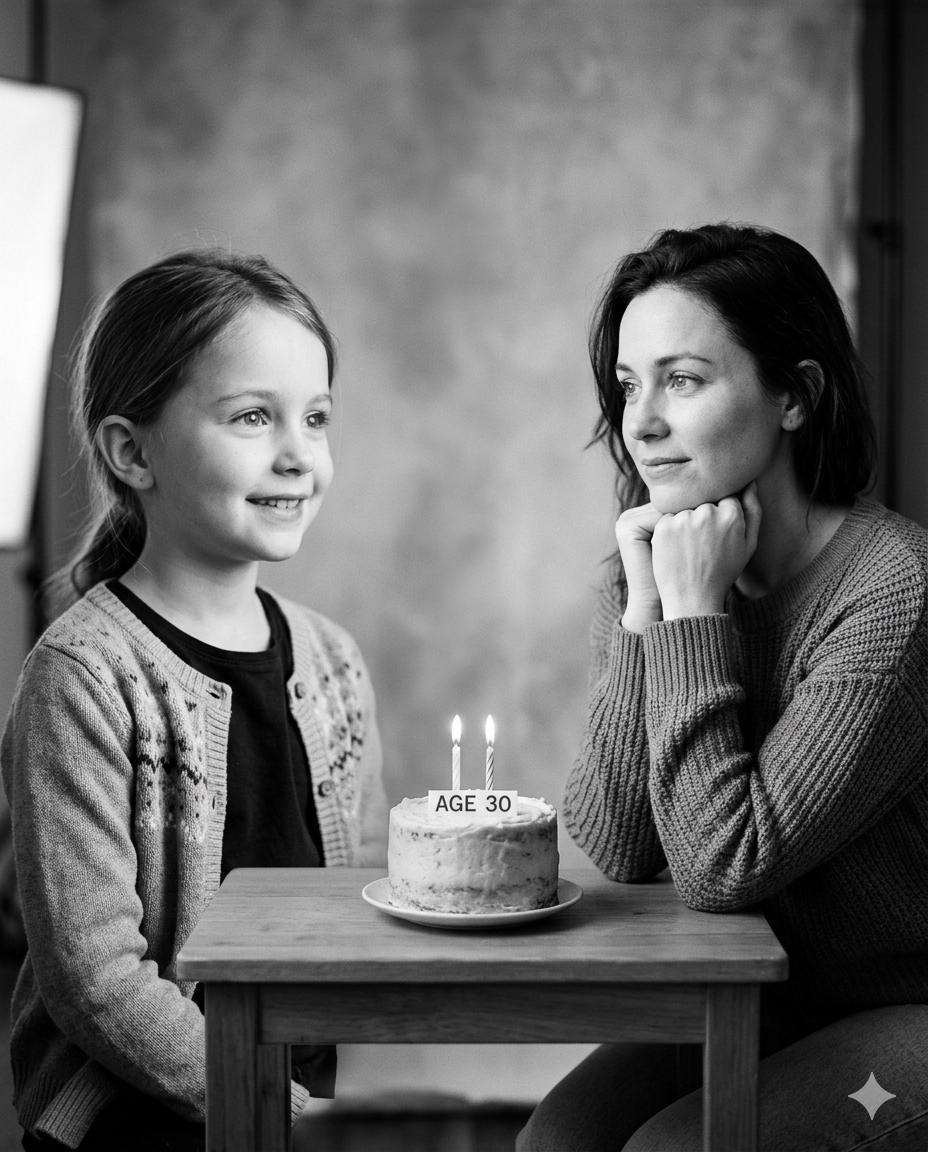
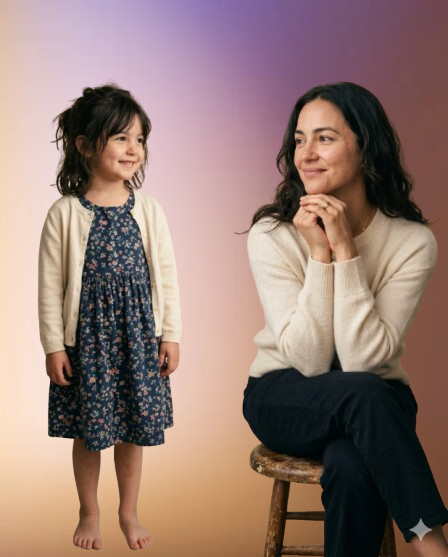
The viral images feature two distinct versions of the same person — combining a childhood photograph with a current one, merging them into a single frame. The AI renders this so realistically that it appears as though two separate individuals bearing identical features are sitting side by side: one representing the subject in their childhood and the other in the present day.
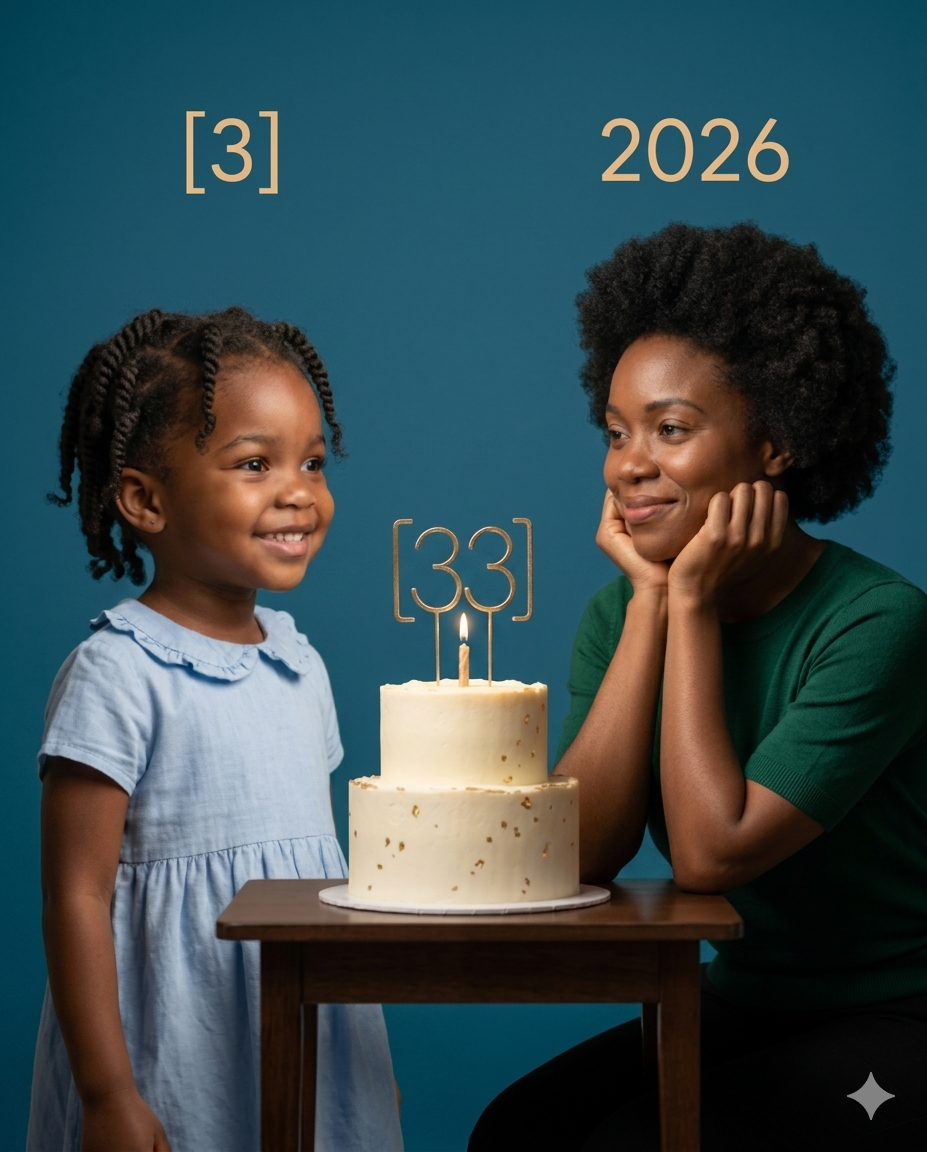
The most popular version of this trend includes:
A childhood version of you on the left, smiling innocently and looking toward the right
A present-day version of you on the right, sitting with hands under chin, looking back at the child
A birthday cake in the center with your current age as the candle number
Year labels above each version (e.g., “2004” and “2026”)
A soft studio background with warm cinematic lighting
The whole image rendered in either color or emotional black-and-white
The “Hug My Younger Self” variation of this trend has also captured hearts worldwide by letting people see a touching moment of their present self embracing their childhood self. It is a simple concept, but the emotions it evokes — nostalgia, warmth, and reflection — make it incredibly powerful and shareable.
Why Is This Trend Going So Viral in 2026?
The internet has seen countless photo trends before. Filters, face swaps, aging effects — they all come and go. So why is this one hitting so much harder?
The answer is simple: it is personal.
Most AI trends ask you to look cool or futuristic. This one asks you to feel something. When you see a realistic image of yourself at age seven sitting across from who you are today, something deeply human happens. You remember who you were. You see how far you have come. You might even feel like you want to say something to that little kid.
Creators use AI to generate images where their present-day self embraces or faces a younger version of themselves — a mix of nostalgia, creativity, and emotional storytelling. The shareability is high because the photos are easy to post on social feeds and often go viral. The creative control that prompts give users — letting them dial up nostalgia, mood, and style — makes it even more compelling.
Social media users are describing the experience as a digital self-reflection exercise, a nostalgic memory trip, and even a form of visual therapy. That kind of emotional depth is rare in viral content, and it is exactly why this trend is spreading so fast under hashtags like #AIChildhoodPortrait, #MeetYoungerSelf, and #ThenAndNowAI.
The Tools You Need: Google Gemini and ChatGPT
You do not need any design skills, expensive software, or professional photography knowledge. You only need two things: your photos and the right prompt.
The two most popular AI tools driving this trend are:
Google Gemini — Google’s powerful AI image tool that accepts photo uploads and generates highly realistic composite portraits based on your written instructions.
ChatGPT (with GPT Image Generation) — To create the image on ChatGPT, open the application, click on the “+” icon, and upload two photos: one from your childhood and one from the present day. Once you have added both images, paste the copied prompt into the text field. Finally, click the “Generate” button and wait a moment — your trendy photo edit will be ready in no time.
Both tools are free to access at a basic level, which is another major reason this trend exploded globally.
The Exact Prompts You Can Copy and Use Right Now
The power of this trend lives in prompt engineering — the specific words you use to instruct the AI. Small changes in wording create very different results. Here are the proven prompt formats that are going viral:
Prompt 1: Classic Black & White Emotional Portrait
“Using the images I upload, create a soft, emotional black-and-white portrait. Left: Childhood version of me from an old photo, facing right with a natural innocent smile. Right: Present-day version of me, seated with hands under chin, looking at the child with a calm, reflective expression. Center: A minimal table with a birthday cake showing my current age. Background: Soft studio backdrop with cinematic lighting. Style: Ultra-realistic, professional photography, natural skin texture, no distortion. Aspect ratio: 4:5.”
AI Childhood Photo Trend
Prompt 2: Then & Now Color Portrait with Year Labels
“Create a hyper-realistic cinematic ‘Then & Now’ portrait in 4K resolution with a vertical 4:5 aspect ratio, styled as a professional emotional studio photoshoot. Left Side: Child version from childhood photo, standing or slightly angled, looking toward the right, innocent natural smile, text above: [YOUR BIRTH YEAR]. Right Side: Present-day version from recent photo, sitting with hands gently placed under chin, looking toward the child, calm soft emotional smile, text above: 2026. Background: Clean studio background, soft white or beige. Lighting: Soft cinematic studio lighting, warm gentle highlights. Style: Minimal, emotional, storytelling-focused. Keep exact facial features — no reshaping, no beautification. Photo size 4:5.”
The AI Childhood Photo Trend
Prompt 3: Birthday Cake Portrait (Most Popular Version)
“Create a hyper-realistic cinematic ‘Then & Now Birthday’ portrait in 4K resolution with vertical 4:5 aspect ratio. Left Side: Child version, slightly angled toward the right, innocent smile, text above: [CHILDHOOD YEAR]. Center: A small table with a simple elegant birthday cake, cake topper showing [YOUR CURRENT AGE], softly lit. Right Side: Present-day version, sitting with hands gently under chin, looking toward the child, calm warm reflective smile, text above: 2026. Clean studio background. Soft cinematic studio lighting. Ultra-realistic skin texture. Keep my original facial features unchanged.”
The AI Childhood Photo Trend
Pro Tip: Always customize the year labels and age number in the prompt. The more specific and personal your instructions, the more emotional and realistic your result will be.
Why Prompt Writing Is the Real Skill Here
A ChatGPT childhood photo prompt is a ready-made text instruction you can copy and paste into AI image tools to transform your childhood and current photos into a realistic, emotional portrait.
But not all prompts work equally. The difference between a generic result and a truly stunning one often comes down to a few key words. Experienced users have discovered that adding phrases like “identity lock”, “no reshaping”, and “natural skin texture with real pores” makes the AI preserve your actual facial features instead of smoothing or altering them.
The most effective prompts include:
Clear composition instructions — telling the AI exactly where to place each version of you
Lighting descriptions — “soft cinematic warm highlights” produces far better results than just “good lighting”
Negative prompts — listing what you don’t want, such as “no cartoon look, no plastic skin, no identity mismatch”
Specific style anchors — phrases like “professional studio photoshoot” and “85mm lens look” guide the AI toward more realistic, photograph-like results
A good AI childhood photo should feel like a real photoshoot, not a random face swap. The best results preserve facial structure, expression, and personal identity while creating a polished cinematic result.
Tips for Getting the Best Results
Choose the right photos. Avoid blurry images, extreme shadows, heavy filters, or cropped faces. A simple selfie or clean portrait gives AI more detail to preserve while applying the new visual style.
Use a well-lit childhood photo. Old photographs sometimes lack clarity. If your childhood photo is dark or blurry, try scanning it or photographing it under natural light before uploading.
Experiment with styles. You can create cake scenes, flower scenes, black-and-white memories, mirror concepts, and polaroid layouts. The childhood photo prompt trend is popular because it is emotional, easy to understand, and highly shareable.
Regenerate if needed. AI does not always get it perfect on the first try. If the result does not look like you, try adjusting your prompt slightly — for example, adding more specific details about your hair color or expression.
This Trend Is Bigger Than Just a Photo Edit
What makes the AI childhood portrait trend truly significant is what it represents. We are watching a shift in how people use AI — away from purely functional tasks and toward something far more personal.
This is not about productivity or efficiency. It is about memory. Growth. Identity. The question, “Who was I, and who am I now?” is one of the most human questions that exists — and people are using cutting-edge AI to answer it visually.
This trend is not just about visuals but about self-connection and storytelling. When used carefully and creatively, AI turns memories into powerful digital art that feels real and meaningful.
As AI image generation continues to improve in 2026, trends like this one will only get more detailed, more personalized, and more emotionally resonant. The childhood self-portrait trend is not a peak — it is a preview of how deeply personal AI-generated content will become.
Go Meet Your Younger Self
Whether you were born in 1995 or 2010, whether you grew up fast or slow, there is something quietly powerful about seeing the child you once were looking back at the person you have become.
The AI childhood portrait trend gives everyone that moment — for free, in minutes, with nothing more than two photos and the right words. Try it today. Share it. You might be surprised what feelings come up when you sit face to face with the kid you used to be.